
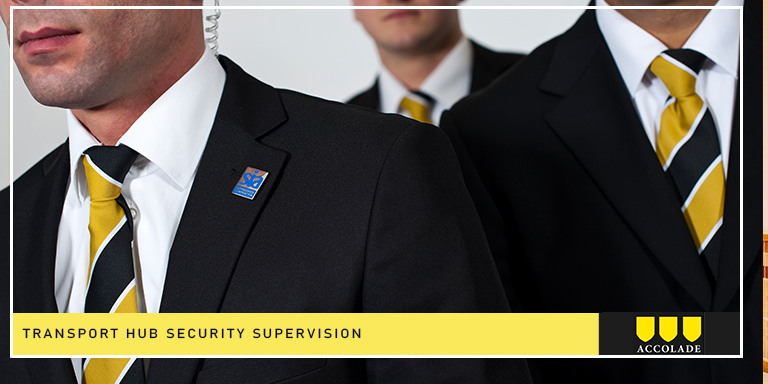
Transport Hub Security Supervision
Transport hub security supervision is the coordinated deployment of SIA-licensed security officers, CCTV monitoring, access control, and incident response protocols to protect passengers, staff, and infrastructure at stations, terminals, and travel interchanges. In London — a city where millions of journeys pass through major rail terminals, bus stations, coach hubs, and interchange concourses daily — the security demands on these environments are constant, complex, and high-stakes. From Victoria and Waterloo to transport interchanges in Stratford, Canary Wharf, and across Central London, effective station and terminal guarding services protect people and keep operations running without disruption.
Professional security is not only about presence. It is about risk assessment, prevention, communication, response, and consistent site supervision.
Why This Matters for London’s Transport Environments
Transport hubs are uniquely challenging security environments. They combine high footfall, open access, multiple entry and exit points, retail concessions, car parks, and restricted operational areas — all within a single site that operates from early morning until late at night.
The risks are equally varied:
- Antisocial behaviour and disorder — rough sleeping, alcohol-related incidents, aggressive begging, and intimidation deter passengers and affect staff wellbeing.
- Theft and pickpocketing — crowded concourses, ticket halls, and retail areas create opportunities for both opportunistic and organised crime.
- Unauthorised access — platform edges, rail infrastructure, maintenance corridors, and staff-only zones require controlled entry to prevent safety incidents.
- Terrorism and suspicious packages — transport hubs remain prominent targets, requiring constant vigilance and practised emergency response plans.
- Trespassing and vandalism — particularly during quieter overnight periods when staffing levels drop.
Without structured transit facility protection and monitoring, these risks escalate quickly. Operational delays increase, passenger confidence drops, and commercial tenants within the hub lose footfall and revenue.
Core Security Services for Transport Hubs
SIA-Licensed Security Officers
Every security operative deployed in a London transport environment must hold a valid Security Industry Authority (SIA) licence under the Private Security Industry Act 2001. This is the legal minimum. However, SIA licensing is only the starting point, not the full quality standard.
Officers working in transport hubs need specific competencies beyond the standard SIA training: crowd management in high-volume environments, awareness of counter-terrorism protocols, confidence in liaising with transport police, and the ability to de-escalate situations involving vulnerable individuals. A guard unfamiliar with the dynamics of a busy interchange concourse will struggle during rush hour, regardless of their licence status.
CCTV Monitoring and Surveillance
Transport hubs require extensive CCTV coverage across concourses, platforms, car parks, retail areas, and service corridors. Live monitoring by trained operators enables real-time detection of suspicious behaviour, unattended items, and crowd density issues.
All CCTV deployment must align with Information Commissioner’s Office (ICO) data protection requirements, including clear signage, proportionate camera placement, defined data retention periods, and restricted access to footage. Properly managed surveillance builds public trust while supporting both crime prevention and post-incident investigation.
Access Control and Restricted Area Management
Transport hubs contain numerous zones that require controlled access — control rooms, electrical substations, signalling equipment, maintenance tunnels, and staff offices. Electronic access control systems, supported by manned checkpoints at sensitive entry points, prevent unauthorised access and create auditable entry logs.
During busy periods, access control also extends to managing passenger flow at platform barriers, escalators, and emergency exits — ensuring safety compliance under Health and Safety Executive (HSE) standards while maintaining efficient movement.
Mobile Patrols and Overnight Security
Outside core operating hours, mobile patrols and key holding services protect perimeter areas, car parks, retail units, and service corridors. Varied patrol routes — randomised to avoid predictability — deter break-ins, vandalism, and rough sleeping during overnight closure periods.
Crowd Control and Passenger Safety
During peak commuting hours, planned engineering works, service disruptions, and large events, passenger safety and crowd control become critical. Security officers manage queuing systems, redirect foot traffic away from congestion points, maintain clear emergency evacuation routes, and communicate capacity limits to hub management in real time.
Step-by-Step: Building a Transport Hub Security Programme
- Conduct a site-specific risk assessment — Survey the entire hub, mapping high-footfall zones, vulnerable access points, blind spots, and areas where antisocial behaviour concentrates. A mainline terminus in Westminster presents different risk factors to a suburban interchange in South London.
- Develop a layered security plan — Define guard positions, patrol routes, CCTV coverage zones, access control points, and escalation procedures. Layer visible guarding with covert observation to address different threat types.
- Deploy experienced, briefed officers — Assign SIA-licensed security officers with relevant experience. Provide detailed site inductions covering emergency evacuation procedures, counter-terrorism awareness, vulnerable person protocols, and reporting requirements.
- Integrate technology and personnel — Connect CCTV operators with patrolling officers through a shared radio network. Ensure alarm systems, public address capabilities, and access control are centrally coordinated from a control room.
- Establish reporting and review cycles — Implement structured incident reporting for every shift. Analyse data weekly to identify emerging patterns — whether that is a repeat antisocial behaviour hotspot, a time-specific theft trend, or a gap in patrol coverage.
- Coordinate with external agencies — Maintain communication protocols with British Transport Police, local Metropolitan Police units, transport operators, and emergency services. Effective transport venue safety oversight depends on integrated response, not isolated guarding.
Common Mistakes to Avoid
Treating transport hubs like static office buildings. These are dynamic, 18-to-24-hour environments with shifting footfall patterns, multiple stakeholders, and constant public access. Security plans must reflect this complexity rather than apply a standard commercial template.
Underestimating overnight vulnerability. Many incidents — vandalism, trespassing, theft from retail units, and rough sleeping in concealed areas — occur during low-traffic hours. Cutting overnight security to reduce costs often proves more expensive through damage and disruption.
Failing to brief officers on counter-terrorism awareness. Transport hubs sit within the UK’s national security landscape. Guards who cannot recognise suspicious indicators, manage an unattended item scenario, or support an evacuation procedure represent a significant operational gap.
Neglecting communication between security and transport staff. Officers who operate without regular briefings from station managers, retail tenants, and transport operators miss critical intelligence. Information sharing is as important as physical guarding.
Ignoring vulnerable individuals. Transport hubs attract rough sleepers, people in mental health crisis, and individuals under the influence of substances. Guards without training in safeguarding and de-escalation can worsen these situations rather than manage them appropriately.
Expert Insight: What Professionals Understand About Transport Security
What organisations often overlook when securing transport environments is the dual nature of the role. Guards must simultaneously maintain public safety, deter criminal activity, manage crowd flow, support vulnerable individuals, and preserve a welcoming atmosphere for millions of daily passengers. This requires a calibre of officer — and a level of supervision — that goes well beyond placing a uniform at a barrier.
Travel interchange security management also demands flexibility. Morning rush hours require visible crowd management at platform level. Midday periods shift focus to retail theft prevention across concourse shops. Evening and night-time operations prioritise antisocial behaviour deterrence, perimeter security, and coordination with police.
Providers accredited under the SIA Approved Contractor Scheme (ACS) — such as Accolade Security — are independently audited for personnel vetting, training standards, operational management, and incident reporting quality. For transport hub operators, ACS accreditation provides a verified benchmark of accountability that generic staffing agencies cannot match.
Key Takeaways
- Transport hub security supervision requires SIA-licensed officers with specific competencies in crowd management, counter-terrorism awareness, and vulnerable person handling.
- Effective security layers visible guarding, active CCTV monitoring, access control, and mobile patrols across all operating hours — including overnight periods.
- Site-specific risk assessments must account for shifting footfall patterns, multiple stakeholders, and the unique infrastructure of each hub.
- Communication between security teams, transport operators, retail tenants, and external agencies is essential for coordinated incident response.
- SIA licensing is the legal baseline; ACS accreditation and structured supervision define operational quality.
- Overnight security is frequently underinvested but critical for preventing vandalism, trespassing, and damage.
Summary
Transport hub security supervision protects passengers, staff, infrastructure, and commercial tenants across London’s busiest stations and travel interchanges. Effective programmes combine SIA-licensed guarding, integrated CCTV, access control, crowd management, and structured incident reporting — adapted to the unique operational rhythm of each site. London’s transport environments demand security officers who can manage high-volume public spaces, respond to diverse threats, and coordinate with transport operators and emergency services. For organisations seeking professionally managed transport hub security supervision across London, contact Accolade Security to discuss a tailored approach to your site’s requirements.
Q&A

Posted By : Accolade Security
At Accolade Security, protecting your business is our priority – so contact us today for more information about how we can help keep your organization secure!