
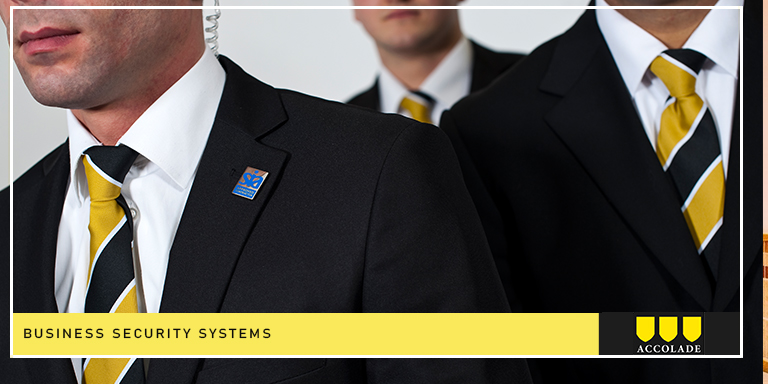
Business Security Systems: A Practical Guide for London Businesses
Effective business security systems bring technology, trained personnel and clear operating procedures together. CCTV may record activity, access control may restrict entry and an alarm may signal a possible intrusion, but none of these measures can protect a premises effectively in isolation. Each component needs to address an identified risk and connect to a practical response.
For London businesses, that means looking beyond equipment specifications. Building layout, operating hours, public access, deliveries, staff movements and the value of assets all influence which security measures are appropriate. A reliable system should help prevent incidents, identify unusual activity, support a proportionate response and provide useful information afterwards.
What Is a Business Security System?
A business security system is a coordinated arrangement designed to protect people, premises, assets and business operations. It may include physical equipment, security personnel, management procedures or a combination of all three.
Common components include:
- CCTV cameras and video management
- Electronic or controlled access
- Intruder and perimeter alarms
- Security officers and reception security
- Key holding and alarm response
- Mobile or scheduled patrols
- Visitor and contractor management
- Security lighting and physical barriers
- Incident reporting procedures
- Emergency contacts and escalation plans
The correct combination depends on the site. A small office does not usually need the same arrangement as a warehouse operating overnight, a high-footfall retailer or a multi-tenant commercial building.
A system should therefore begin with a clear understanding of the risks rather than a list of available products. Without that foundation, a business may spend money on equipment that duplicates an existing control, monitors the wrong area or produces an alert that nobody is responsible for investigating.
Why Equipment Alone Does Not Provide Complete Protection
Security technology is valuable, but every device has operational limitations.
A camera can provide live or recorded images, yet its usefulness depends on positioning, lighting, image quality, maintenance and monitoring. An access-control system can limit entry, but it will not prevent an authorised person from holding a door open for someone else. An alarm can detect a possible breach, but it still needs a defined response.
This creates an important distinction between owning security equipment and operating a security system.
A complete arrangement should answer five questions:
- What risk is the measure intended to control?
- Who monitors or manages it?
- What happens when it produces an alert?
- How is the incident documented?
- Who reviews performance and recurring problems?
If these questions cannot be answered, the control may exist without offering dependable protection.
The value of human judgement
Technology can detect movement, recognise a credential or display footage. It does not always understand context.
A security officer may notice that a delivery is arriving outside its normal time, that someone is repeatedly testing a restricted entrance or that a visitor’s behaviour does not match the purpose of the visit. Human observation can help interpret events that automated equipment may record without properly assessing.
This does not mean every business requires permanent guarding. It means businesses should decide where judgement, verification or physical intervention is needed and ensure that someone is responsible for it.
Core Components of Business Security Systems
The components below address different types of risk. They should be selected because they perform a necessary function, not because they appear in a standard package.
CCTV and video surveillance
CCTV can support deterrence, live observation, incident investigation and evidence gathering. It is commonly used around entrances, loading areas, car parks, stock rooms, reception points and other vulnerable locations.
Camera quantity alone is not a useful measure of effectiveness. A smaller number of correctly positioned cameras may provide more value than a large installation with blind spots, poor lighting or unsuitable image quality.
Before installing or upgrading CCTV, a business should determine:
- The purpose of each camera
- The area and activity that must be captured
- Whether live monitoring is necessary
- Who can access recordings
- How long footage should be retained
- How images can be retrieved after an incident
- What happens if a camera or recording device fails
Businesses must also consider their data-protection responsibilities. The Information Commissioner’s Office explains that organisations using surveillance systems must identify an appropriate lawful basis and ensure the system is suitable for its stated purpose. A Data Protection Impact Assessment may be required where monitoring is likely to create a high risk to individuals, including certain forms of workplace monitoring. Further guidance is available from the Information Commissioner’s Office.
Where footage may be provided to the police, recording quality, storage and accessibility also matter. A camera that shows an incident but cannot produce usable or accessible footage has limited investigative value.
Accolade Security provides public-space surveillance and CCTV services for organisations requiring trained surveillance support.
Access control and visitor management
Access control regulates who can enter a building or restricted area. Depending on the premises, this may involve keys, access cards, codes, intercoms, reception checks or electronically managed permissions.
Its effectiveness depends on how permissions are issued, reviewed and withdrawn. A technically sound system can still become vulnerable if former employees retain active credentials, shared access cards are common or contractor permissions remain open after work has finished.
Visitor management should support access control rather than operate separately from it. Useful procedures may include:
- Confirming the purpose of a visit
- Recording arrival and departure
- Issuing temporary credentials
- Identifying areas that visitors may access
- Providing escorts where appropriate
- Recovering passes before departure
- Escalating unexpected or disputed access
London offices and multi-tenant buildings may experience regular movement by staff, cleaners, contractors, delivery personnel and visitors. The access process must remain secure without creating unnecessary disruption at reception or loading points.
Intruder alarms and response arrangements
An intruder alarm is intended to identify suspicious access or activity. However, detection is only the first stage.
The business must establish who receives an alert, how it is verified and who is authorised to attend the premises. Relying on an employee to investigate an out-of-hours alarm can expose that person to an unknown situation and may lead to inconsistent response times.
A written response procedure should cover:
- Alarm notification
- Verification information
- Primary and backup contacts
- Attendance arrangements
- Police or emergency-service escalation
- Access to keys and alarm codes
- Incident recording
- Resetting and securing the premises
Professional key holding services can support alarm response, security patrols and managed lock-and-unlock arrangements. The precise scope should be agreed for the individual premises.
Security guarding
Security officers can provide a visible presence, control access, carry out patrols, support staff and visitors, respond to incidents and maintain records. Their duties should reflect the real risks and operating requirements of the site.
A generic instruction to “protect the building” is not enough. Officers need clear assignment instructions covering patrol routes, restricted areas, access procedures, emergency contacts, alarm actions, reporting expectations and escalation limits.
Businesses buying licensable security services should verify that individuals hold the correct Security Industry Authority licence for the work they perform. The government provides an online service to check private security licences.
An SIA licence is a legal entry requirement for relevant licensable activities. It should not, by itself, be treated as proof that an entire service will be well managed. Deployment planning, supervision, communication, reporting standards, site knowledge and management oversight also affect quality.
The SIA’s Approved Contractor Scheme applies to companies rather than individual officers and covers specific regulated activities. Accolade Security states that it holds approved contractor status for Security Guarding, Door Supervision, Key Holding and Public Space Surveillance CCTV. Businesses can review its corporate security services in London when considering guarding and site-support requirements.
Start With the Risk, Not the Product
A security decision should begin with what could realistically go wrong at the premises.
A site review may consider:
- Uncontrolled entrances and exits
- Areas concealed from staff or cameras
- Valuable stock, equipment or information
- Out-of-hours activity
- Deliveries and contractor access
- Lone working
- Previous incidents or suspicious behaviour
- Public-facing areas
- Emergency access and evacuation routes
- Existing equipment and procedures
- Dependencies between different controls
The objective is not to eliminate every imaginable risk. That would rarely be practical. The objective is to prioritise credible threats and introduce proportionate controls.
For example, repeated unauthorised access through a staff entrance may require better credential management, door controls and staff procedures. Installing additional cameras without addressing the access weakness might improve the record of incidents without preventing them.
A professional security consultancy assessment can help a business examine its exposure and develop a security plan around its actual operations.
How Requirements Differ Between Business Environments
There is no universal security configuration because commercial premises operate differently.
Offices and corporate buildings
Corporate premises often prioritise reception security, visitor verification, controlled access to restricted areas and a professional front-of-house experience.
The security system must support normal business activity. Excessive controls can create queues and frustration, while weak processes can allow unauthorised people to move beyond reception. The strongest arrangements balance protection with efficient access.
Retail premises
Retail security must account for customer movement, stock loss, staff safety and conflict. CCTV coverage may support observation and investigation, while trained officers can provide a visible presence and respond to developing situations.
Security should not make legitimate customers feel unwelcome. Positioning, communication and officer conduct therefore matter alongside deterrence.
Warehouses and industrial sites
Warehouses may have large perimeters, multiple loading points, valuable stock, vehicle movements and significant out-of-hours exposure. Effective protection may combine controlled gates, CCTV, alarms, patrols and strict management of driver and contractor access.
Particular attention should be paid to handover periods, loading activity and areas where people or goods can leave without passing a controlled point.
Hotels and hospitality premises
Hotels require security that operates discreetly within a guest-service environment. Public access, overnight operations, events, deliveries and private accommodation areas create different levels of access within one building.
Officers working in such environments need clear escalation procedures and strong communication skills. A security response that is technically correct but poorly handled can disrupt guests and staff.
What to Check Before Choosing a Security System
A useful buying decision should consider how the arrangement will operate after installation or deployment.
Does it address a defined risk?
Every major component should have a clear purpose. Avoid purchasing equipment simply because it is common or technologically impressive.
Can the components work together?
CCTV, alarms, access control and guarding should support one another. An access alert, for example, is more useful when the responsible person can check relevant footage and follow an agreed response procedure.
Who owns the response?
Alerts need named responsibilities. The business should know who receives information, who makes decisions and who attends the location where necessary.
How will performance be documented?
Incident reports, patrol records, alarm logs, access records and maintenance information can reveal recurring weaknesses. Reporting should help management improve the system, not merely confirm that a task occurred.
What happens when operations change?
Changes to opening hours, tenants, staff, entrances, stock, construction work or visitor numbers can make an existing arrangement less effective. Security should be reviewed when the premises or its use changes substantially.
Are privacy and compliance considered?
CCTV and other monitoring technology can involve personal-data processing. Businesses should understand who controls the data, why it is collected, how access is restricted and how long it is retained. Appropriate signage and documented policies may also be required.
This article provides general operational guidance and should not be treated as legal or regulatory advice.
Common Gaps That Reduce Security Effectiveness
A business may have several visible security measures and still remain exposed because of small operational weaknesses.
Common gaps include:
- Cameras that do not cover the activity they were installed to monitor
- Alarm notifications sent to outdated contact details
- Former staff retaining active access permissions
- Shared access cards or entry codes
- Unclear responsibility for reviewing CCTV footage
- Security officers working without site-specific instructions
- Patrols that do not cover changing risk areas
- Incidents recorded without management follow-up
- Equipment faults remaining unresolved
- Staff bypassing procedures for convenience
These problems are rarely solved by adding another standalone device. They require ownership, review and consistent management.
Building a System That Supports Business Continuity
The best security arrangement is not necessarily the most complex. It is the one that helps the organisation prevent avoidable disruption and respond in a controlled way when an incident occurs.
Business continuity should be considered when deciding:
- Which entrances must remain usable during an incident
- Who can authorise emergency access
- How critical areas will be protected if a system fails
- How staff will receive instructions
- Where incident records and footage can be accessed
- Who contacts emergency services, landlords or senior management
- How the premises will be secured after an event
These details turn security from a collection of preventative measures into an operational response system.
Reviewing Business Security Systems Over Time
Security requirements do not remain fixed. A review may be appropriate after:
- An incident or attempted breach
- A change in operating hours
- Relocation or refurbishment
- Introduction of new equipment
- Changes in staffing or tenancy
- Expansion of public access
- New delivery or contractor arrangements
- Repeated false alarms
- Significant changes to stored assets
- Weaknesses identified through reports or inspections
The review should ask whether the original risks still apply, whether new vulnerabilities have appeared and whether existing measures are performing as expected.
Regular review does not always mean purchasing more equipment. It may lead to repositioning a camera, removing outdated access rights, improving site instructions or changing who receives an alarm notification.
Choosing Proportionate Protection for Your London Premises
Reliable business security systems are built around the way a premises actually operates. CCTV, access control, alarms, guarding and response procedures each serve different purposes, and their value depends on how well they are coordinated.
London businesses should begin by identifying their most credible risks, then choose proportionate measures with clear responsibility for monitoring, response, reporting and review. This approach reduces gaps, avoids unnecessary duplication and supports safer, more consistent operations.
Accolade Security provides corporate security, consultancy, key holding and public-space CCTV support in London. Businesses reviewing their current arrangements can contact the team to discuss a site-specific assessment and determine which forms of support are relevant to their premises.
Frequently Asked Questions

Posted By : Accolade Security
At Accolade Security, protecting your business is our priority – so contact us today for more information about how we can help keep your organization secure!