
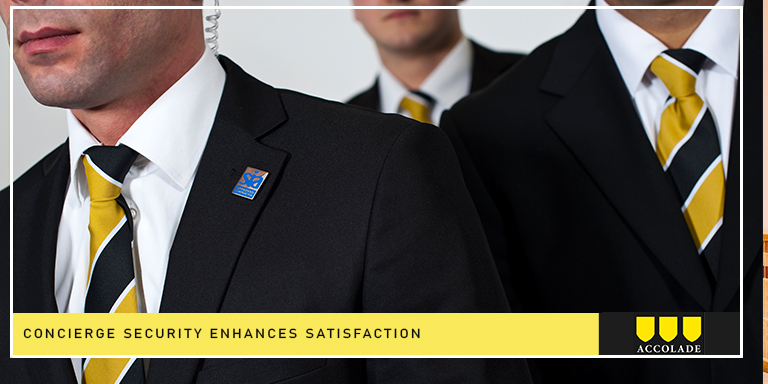
Concierge Security Enhances Satisfaction
Concierge Security Enhances Satisfaction by combining professional protection with helpful front-of-house support. In London offices, hotels, residential developments and commercial buildings, a trained concierge security officer can welcome visitors, control access, observe suspicious activity, manage incidents and support staff without making the premises feel uninviting. The service improves satisfaction because people feel safer, receive clear assistance and encounter a professional point of contact when entering the property.
What Is Concierge Security?
Concierge security is a combined security and customer-facing service delivered at a reception desk, lobby, entrance or other important access point.
Unlike a conventional receptionist, a concierge security officer has defined protective responsibilities. Depending on the site and the officer’s duties, these may include:
- Checking visitors and contractors
- Monitoring entrances and communal areas
- Managing visitor passes
- Applying access control procedures
- Observing CCTV systems
- Recording incidents
- Responding to alarms
- Supporting emergency arrangements
- Reporting suspicious behaviour
- Assisting occupants, customers and guests
The officer must remain approachable while maintaining professional awareness. This balance is particularly valuable in London, where offices, hotels and mixed-use developments often experience high levels of visitor movement.
A strong concierge service does not replace reception, facilities management or the emergency services. Instead, it adds a trained security presence to the front-of-house environment.
How Concierge Security Enhances Satisfaction
People usually form an opinion of a property within moments of arriving. An unattended, confusing or poorly controlled entrance can create anxiety. In contrast, a professional concierge security officer provides reassurance and direction.
Concierge security enhances satisfaction in several practical ways.
It creates a reassuring first impression
Visitors want to know that a building is managed properly. A clearly identifiable officer can greet them, explain the sign-in procedure and direct them to the correct floor, office or department.
This organised approach supports the image of the building without relying on excessive or intimidating security measures.
It makes access procedures easier to understand
Access control can frustrate visitors when instructions are unclear. Concierge officers can explain why identification, registration or an appointment confirmation is required. Clear communication reduces disputes and helps legitimate visitors move through the building efficiently.
It supports staff confidence
Employees may feel more confident when they know somebody is observing the entrance, recording incidents and responding to unusual activity. The presence of a trained officer can be particularly valuable during early openings, late finishes, lone-working periods and busy delivery times.
It helps manage difficult situations calmly
A concierge security officer may be the first person to encounter an aggressive visitor, an intoxicated individual, an unauthorised contractor or a person in distress.
Good officers use communication and de-escalation before a situation develops. They also understand when to contact site management, emergency services or another authorised responder.
It improves continuity during everyday disruption
Lost passes, unexpected visitors, faulty doors, unattended packages and delivery disputes may not be major emergencies. However, they can interrupt business operations. A capable front-of-house security officer can assess the issue, follow the agreed procedure and record the outcome. Effective concierge security protects the entrance while helping legitimate users feel welcome.
Why This Topic Matters for London Businesses
London properties often manage several competing priorities. They must protect people and assets while maintaining a positive experience for staff, customers, residents and visitors.
A Central London office may receive employees, interview candidates, clients, delivery drivers and maintenance contractors within the same hour. A hotel in Westminster or Kensington may need to protect guests without disrupting hospitality. A residential development in Canary Wharf may require careful visitor verification while preserving residents’ privacy.
The same generic guarding plan will not suit every environment.
Professional security matters because failures at the main entrance can expose a business or property to:
- Theft and loss
- Trespassing
- Unauthorised access
- Antisocial behaviour
- Vandalism
- Tailgating through controlled doors
- Disturbance of staff or residents
- Damage to property
- Operational interruption
- Reputational concerns
- Delayed emergency response
However, visible guarding alone is not enough. Officers must understand what to observe, when to intervene, who to inform and how to document an incident.
Professional security is not only about presence. It is about risk assessment, prevention, communication, response, and consistent site supervision.
The Difference Between Concierge Security and Standard Reception
Reception and concierge security may share some front-of-house activities, but their primary responsibilities differ.
A receptionist usually concentrates on administration, appointments, calls, visitor assistance and customer service. A concierge security officer also considers risk, access permissions, unusual behaviour, incident escalation and emergency procedures.
The precise duties should always be defined in writing. A concierge officer should not be expected to perform so many administrative tasks that security awareness becomes secondary.
An effective arrangement may involve collaboration between:
- Reception teams
- Security officers
- Facilities managers
- Building managers
- Hotel management
- Property management companies
- Health and safety personnel
- Cleaning and maintenance contractors
Clear responsibilities prevent gaps and duplication.
Key Services and Practical Security Considerations
Concierge security often works best as part of a broader protection plan.
Security guards
Static security guards may protect entrances, loading areas, car parks, plant rooms or restricted zones. At larger properties, a concierge officer at reception may communicate with guards positioned elsewhere on the site.
This arrangement creates both a professional front-of-house presence and wider site coverage.
Mobile patrols
Mobile patrols can inspect external doors, perimeter areas, car parks, fire exits and less frequently occupied spaces.
Patrols may be scheduled or varied according to the risk assessment. Variation can make security routines less predictable to potential intruders.
CCTV monitoring
CCTV can support observation, incident verification and post-incident review. However, cameras do not automatically create an effective response.
A business should determine:
- Why the cameras are needed
- Which areas require monitoring
- Who may view the footage
- How long recordings are retained
- How incidents are escalated
- How access requests are managed
- Whether signage and privacy information are appropriate
Businesses should consider relevant guidance from the Information Commissioner’s Office when CCTV captures identifiable individuals. This is a general operational consideration rather than legal advice.
Access control
Access control is more than operating a barrier or issuing a pass. It requires a clear process for employees, contractors, visitors, deliveries and exceptions.
Effective procedures may cover:
- Identity or appointment verification
- Visitor registration
- Host confirmation
- Pass issue and return
- Escort requirements
- Restricted-area permissions
- Lost or expired credentials
- After-hours access
- Emergency entry arrangements
- Incident escalation
A concierge security officer should know when courtesy must be supported by firm refusal. An unauthorised person should not gain entry simply because they appear confident or claim to know a senior employee.
Key holding and alarm response
Professional key holding and alarm response can reduce the need for an employee or property manager to attend an alarm alone.
The response arrangement should establish who has authority to enter, what checks must be made, which contacts should receive an update and how the incident will be documented.
Incident reporting
A useful incident report should be factual, timely and specific. It should record:
- Date and time
- Exact location
- People involved
- What the officer observed
- Action taken
- People contacted
- Evidence preserved
- Immediate outcome
- Recommended follow-up
Reports should avoid assumptions and emotional language. Good reporting helps management identify patterns, improve procedures and make informed operational decisions.
Security Requirements Differ Between London Sites
Corporate offices
Corporate security services may include visitor management, employee access control, contractor checks, CCTV observation and support during internal events.
Corporate concierge security should remain professional and discreet. Officers may also help manage protest activity, unwanted visitors, workplace disputes or suspicious deliveries according to site procedures.
Hotels
Hotel security services in London must protect guests while supporting hospitality. A hotel security officer may monitor the lobby, assist with access to guest areas, respond to disturbances and coordinate with reception or duty management. The officer must handle sensitive situations calmly because poor communication can affect both safety and the guest experience.
Retail stores
Retail security guards concentrate on loss prevention, customer safety, suspicious behaviour and incident response. In luxury retail environments, the officer’s presentation and communication skills matter as much as visibility. An overly confrontational presence may make genuine customers uncomfortable, while passive observation may fail to deter theft.
Residential and mixed-use properties
Concierge security can help residents receive visitors, deliveries and contractors safely. Officers may also monitor communal areas and identify repeated access concerns. Privacy is especially important. Officers should not disclose information about residents, apartment numbers, routines or occupancy to unauthorised individuals.
Construction sites
Construction site security in London requires stronger attention to perimeter protection, plant, fuel, tools, materials, delivery access and out-of-hours activity. A traditional concierge desk may not be suitable. However, a gatehouse security officer may carry out similar visitor-control and contractor-verification duties.
The officer should also understand site-specific health and safety requirements. Security staff should not enter hazardous zones or direct construction activities unless their role, training and authority permit it.
Events
Event security services may involve admission checks, queue management, restricted-area control, crowd observation and emergency support.
The security plan should reflect attendance, audience profile, alcohol availability, layout, transport arrangements and evacuation routes.
Event stewards and licensed security officers do not necessarily perform the same duties. Organisers should identify which roles involve licensable security activity.
Licensed premises
Door supervision at bars, clubs and other licensed venues requires the appropriate SIA licence where the activity falls within licensing requirements.
Door supervisors may check admission conditions, manage queues, observe customer behaviour and respond to disorder. They should apply venue policies consistently and communicate clearly with management.
Why SIA Licensing Is Only the Starting Point
The Security Industry Authority regulates parts of the UK private security industry. A valid SIA licence indicates that an individual has met the applicable entry requirements for the relevant licensable role.
However, an SIA licence should not be treated as proof that every officer is suitable for every site.
The officer must also receive:
- A clear assignment briefing
- Site-specific instructions
- Emergency procedure training
- Relevant customer-service guidance
- Information about vulnerable areas
- Reporting expectations
- Escalation contacts
- Appropriate supervision
- Refresher briefings when risks change
For concierge security, interpersonal skills are particularly important. An officer may be properly licensed but still need additional development in reception etiquette, conflict management, written reporting or building procedures.
The SIA’s Approved Contractor Scheme is a voluntary quality-assurance scheme for security suppliers. The SIA states that approved contractors are assessed across numerous areas of business performance.
Accolade Security states that it holds approved contractor status for door supervision, security guarding, key holding and CCTV. Businesses can also check the official SIA registers when conducting supplier due diligence.
Step-by-Step Security Process
A professional concierge security arrangement should follow a structured process.
Step 1: Understand the property
The provider should identify the building type, operating hours, occupancy, public access, surrounding area and previous incident history.
A City of London office will not have the same operating pattern as a hotel, retail store or residential block.
Step 2: Complete a site-specific risk assessment
The assessment should examine realistic threats and vulnerabilities, including:
- Uncontrolled entrances
- Tailgating
- Blind spots
- Loading and delivery areas
- Lone working
- High-value assets
- After-hours access
- Antisocial behaviour
- Protest or event activity
- Fire and evacuation considerations
- Communication failures
A generic assessment copied from another site may overlook the building’s actual exposure.
Step 3: Define the security objectives
The client and security provider should agree on what the service must achieve. Objectives may include reducing unauthorised entry, improving visitor management, supporting staff confidence, monitoring a lobby or providing a trained first response to incidents.
Step 4: Design the operating plan
The plan may combine concierge security with static guarding, mobile patrols, key holding, CCTV monitoring or electronic access control. The provider should not recommend extra measures without a clear operational reason.
Step 5: Create site instructions
Site instructions should explain the officer’s responsibilities, limits of authority, patrol duties, reporting procedure and escalation routes. They should be practical enough to use during a live incident.
Step 6: Select and brief suitable officers
The appropriate SIA licence must be confirmed for licensable duties. In addition, the officer should be matched to the environment. A hotel may prioritise hospitality experience, while a construction site may require familiarity with gatehouse control and contractor procedures.
Step 7: Supervise performance
Management should check attendance, presentation, knowledge of instructions, reporting quality and communication with the client. Supervision should identify problems before they become repeated service failures.
Step 8: Review incidents and adapt
Risk is not fixed. Changes in occupancy, opening hours, building works, tenant mix or local conditions may affect the security plan. Incident reports, staff feedback and visitor concerns can reveal where adjustments are required.
What London Businesses Often Overlook
The entrance is not the only vulnerability
Many businesses focus on the reception desk but overlook fire exits, loading bays, car parks, service corridors and shared access points. A concierge officer cannot protect areas they cannot see unless patrols, CCTV or additional controls support the position.
Customer service must not distract from observation
A helpful officer may become occupied with directions, telephone enquiries or administrative work. During that period, somebody may enter behind another visitor or leave an item unattended. The assignment should protect the officer’s ability to observe.
Site instructions can become outdated
Staff changes, altered access routes and new tenants can make old instructions unreliable. Instructions should be reviewed after significant changes and following relevant incidents.
Management needs useful reports
A report stating “all quiet” provides little operational value. Management needs details of rejected access attempts, recurring door faults, suspicious behaviour and procedural weaknesses.
Security should be integrated with building operations
Facilities, reception, property management and security teams should not work in isolation. Shared escalation routes reduce confusion during an emergency.
Choosing a Concierge Security Provider in London
Before appointing a provider, businesses should ask practical questions:
- Which services and licensable activities are included?
- How are SIA licences checked?
- Is the company listed under the SIA Approved Contractor Scheme for the required activity?
- How are officers selected for customer-facing roles?
- Who prepares the risk assessment and site instructions?
- How often are officers supervised?
- How are incidents reported?
- What happens when the regular officer is unavailable?
- How will CCTV-related duties be managed?
- How often will the service be reviewed?
A professional provider should be willing to discuss risks and procedures rather than offering the same package to every client.
Accolade Security provides concierge security services in London alongside other published services for corporate offices, hotels, retail properties, events, residential buildings and construction sites.
Businesses considering front-of-house protection can contact Accolade Security to discuss the property, operating hours and site-specific risks. The aim should be to identify suitable support rather than applying unnecessary measures.
Key Takeaways
- Concierge security combines front-of-house assistance with defined protective responsibilities.
- It can improve satisfaction by making visitors, staff, guests and residents feel both welcome and secure.
- SIA licensing is essential for relevant licensable work, but it is only the starting point for quality.
- Officer selection, site instructions, supervision and communication strongly affect service performance.
- Security needs differ across offices, hotels, retail stores, residential buildings, construction sites, events and licensed premises.
- CCTV should have a clear purpose, controlled access and an appropriate response procedure.
- Access control must cover visitors, employees, contractors, deliveries and exceptional situations.
- Incident reports should provide factual information that helps management make decisions.
- Site-specific risk assessment is necessary because no two London properties operate in exactly the same way.
- Visible guarding and proactive observation work best when supported by clear procedures.
Summary
Concierge security creates value when it supports both protection and the day-to-day experience of a property. The officer at the entrance is often the first person to welcome a visitor, identify an access concern or respond to an emerging incident.
However, the effectiveness of the service depends on more than appearance. Businesses should consider the officer’s SIA licence, suitability for the environment, assignment instructions, supervision, communication skills and access to management support.
When based on a site-specific risk assessment, Concierge Security Enhances Satisfaction by providing a reassuring presence, clearer access procedures, faster incident escalation and better support for operational continuity.
The most suitable arrangement may combine concierge security with CCTV monitoring, mobile patrols, key holding, static guarding or other proportionate controls. London businesses and property managers should select measures according to actual risks rather than relying on a generic package.
Questions and Answers

Posted By : Accolade Security
At Accolade Security, protecting your business is our priority – so contact us today for more information about how we can help keep your organization secure!