
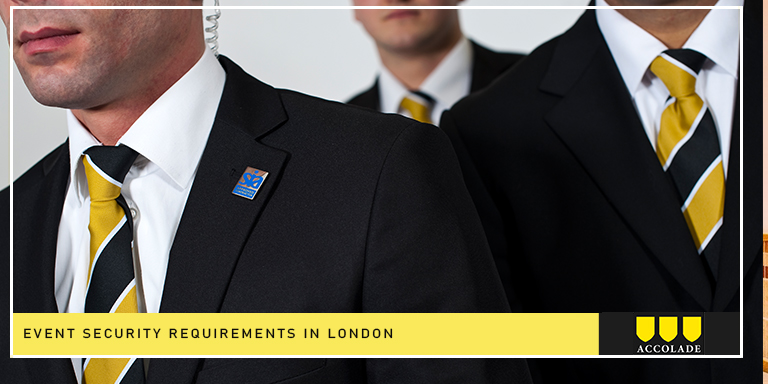
Event Security Requirements in London: A Practical Guide for Organisers
What Are the Core Event Security Requirements in London?
Event security requirements in London cover a combination of legal obligations, operational planning, and on-site personnel management that every organiser must address before, during, and after an event. At a minimum, these requirements include deploying SIA-licensed security staff, conducting a documented risk assessment, preparing an emergency response plan, and coordinating with local authorities where necessary. Whether you are planning a corporate conference in the City of London, a music festival in East London, or a private function in Westminster, getting event security right protects your attendees, your staff, your venue, and your reputation.
Professional security is not only about presence. It is about risk assessment, prevention, communication, response, and consistent site supervision.
Why Event Security Matters for London Businesses and Organisers
London hosts thousands of events each year — from exhibitions and award ceremonies to outdoor festivals and charity galas. Each event presents its own combination of risks: crowd surges, unauthorised access, theft, antisocial behaviour, medical emergencies, and potential terrorism threats.
Getting event security wrong carries serious consequences. Poor crowd management can lead to injuries. Inadequate access control invites trespassing and disruption. Failing to meet licensing conditions can result in enforcement action from the local authority or police.
Beyond compliance, well-planned occasion security management directly supports the attendee experience. Guests feel safer, staff perform with greater confidence, and the event itself runs more smoothly. For organisers working across Central London venues, Canary Wharf conference spaces, or outdoor sites in Camden and Stratford, these outcomes depend on thorough preparation — not last-minute staffing decisions.
Understanding SIA Licensing for Event Security Staff
The Security Industry Authority (SIA) regulates the UK private security industry. Any individual performing licensable security activities at an event — including door supervision, security guarding, or public space CCTV operation — must hold a valid SIA licence.
What SIA Licensing Covers
- Door supervisors — required at any event operating under a premises licence or temporary event notice.
- Security guards — deployed for access control, perimeter monitoring, and asset protection.
- CCTV operators — needed when operatives monitor public space surveillance systems in real time.
However, an SIA licence confirms minimum competence. It does not guarantee that an operative understands your specific venue layout, your crowd profile, or your emergency procedures. That is why SIA licensed event security staff should always receive a site-specific briefing before deployment.
Organisers should also consider whether their security provider holds SIA Approved Contractor Scheme (ACS) accreditation. ACS status means the company has been independently audited against 78 achievement indicators covering training, financial management, and health and safety standards.
Step-by-Step Event Security Planning Process
Effective venue security planning follows a structured process. Skipping steps creates gaps that become problems on the day.
Step 1: Conduct a Site-Specific Risk Assessment
Walk the venue before the event. Identify entry and exit points, crowd pinch points, CCTV blind spots, and areas with limited visibility. Assess risks specific to the event type, audience size, time of day, and surrounding environment. The Health and Safety Executive (HSE) provides general guidance on event safety that organisers should consider alongside their security planning.
Step 2: Define Staffing Levels and Roles
Match security staffing to the risk assessment — not to a generic ratio. A 200-person corporate reception in Kensington needs a different security profile than a 2,000-capacity outdoor music event in Stratford. Roles should include access controllers, roving patrols, CCTV monitors, and a designated security supervisor.
Step 3: Prepare an Emergency Response Plan
Document procedures for medical emergencies, evacuations, fire, hostile threats, and crowd disturbances. Every member of the security team must understand the plan before the event begins. Coordination with venue management, first aid providers, and — where relevant — the Metropolitan Police is essential for larger gatherings.
Step 4: Brief All Security Personnel
Site instructions, communication protocols, escalation procedures, and reporting requirements must be delivered in a pre-event briefing. Operatives who arrive without a briefing cannot perform their role effectively, regardless of their SIA credentials.
Step 5: Supervise, Monitor, and Report
Active supervision during the event ensures that standards are maintained. Incident logs should be completed in real time, and a post-event debrief should capture lessons learned. This is where function safety and security planning translates into measurable accountability.
How Event Security Needs Differ Across London Venues
What London organisers often overlook is how significantly security requirements vary by event type and location.
- Corporate conferences and exhibitions — Corporate security at business events focuses on access control, VIP protection, delegate registration checks, and data protection for attendee information.
- Music festivals and outdoor events — Event crowd management demands trained stewards, perimeter security, search teams, and close coordination with emergency services. Counter-terrorism awareness (ACT) training becomes particularly relevant.
- Private functions and weddings — A discreet security presence manages guest lists and vehicle access without disrupting the atmosphere.
- Licensed premises events — Door supervisors with SIA door supervisor licences are a legal requirement. They manage capacity, verify identification, and handle intoxicated or aggressive individuals.
- Stadium and sporting events — Stadium security requires large-scale crowd management, turnstile monitoring, and incident response at pace.
Each scenario requires a tailored event risk assessment — a single security template does not cover the range of threats and operational contexts London presents.
Common Mistakes to Avoid with Event Security
- Booking security staff too late. Last-minute bookings often mean under-briefed operatives who are unfamiliar with the venue. Start planning security alongside your event logistics, not as an afterthought.
- Choosing a provider based solely on cost. The cheapest option may lack ACS accreditation, adequate insurance, or experienced supervisors. When gathering protection services fall short, the organiser bears the consequences.
- Ignoring CCTV and data protection. If your event uses CCTV monitoring, you must consider data protection obligations. The Information Commissioner’s Office (ICO) provides guidance on surveillance camera use that event organisers should be aware of.
- Skipping the risk assessment. Without a documented risk assessment, security teams operate reactively rather than proactively. This is the single most common failure point in event security.
- No communication plan between security and event management. Security staff need a direct communication line to the event organiser, venue management, and emergency services. Radio channels, designated contacts, and escalation protocols prevent confusion during critical moments.
Expert Insight: Why Visible Guarding and Proactive Observation Both Matter
Experienced security professionals understand that live event stewarding and guarding serves two distinct purposes. Visible security — uniformed guards at entry points, clearly identifiable stewards within the venue — deters opportunistic crime and reassures attendees. Proactive observation — monitoring crowd behaviour, identifying emerging risks, watching for suspicious activity — prevents incidents before they develop.
The most effective event security operations combine both approaches. A well-positioned security officer who spots early signs of crowd pressure at a choke point can prevent a crush. A door supervisor who recognises pre-conflict behaviour can de-escalate a situation before it becomes violent.
This dual approach is why site instructions, reporting, and ongoing supervision matter as much as the initial staffing decision. Accolade Security deploys SIA-licensed, first aid certified, and ACT Awareness trained event security officers, supported by an IOSH-qualified management team that conducts site risk assessments and provides on-site supervision. Their ACS-accredited operations adhere to British Standards BS7858 and BS7499.
Key Takeaways
- Event security requirements in London include SIA-licensed staff, documented risk assessments, emergency response plans, and venue-specific briefings.
- An SIA licence is a legal baseline — not a complete quality standard. Look for ACS accreditation and relevant operational experience.
- Security planning should start alongside event planning, not after logistics are finalised.
- Staffing levels, roles, and communication protocols must be tailored to the specific event type, venue, and audience.
- CCTV use at events carries data protection responsibilities under ICO guidance.
- Visible guarding and proactive observation work together to prevent incidents and protect attendees.
Summary
Meeting event security requirements in London demands more than placing uniformed personnel at the door. It requires a structured approach: risk assessment, appropriate SIA-licensed staffing, emergency planning, clear communication, and active supervision throughout the event. The specific security profile varies significantly between a corporate function in the City of London and an outdoor festival in East London, and organisers who apply a one-size-fits-all approach expose themselves to avoidable risks. For London event organisers seeking professional, ACS-accredited event security support, Accolade Security can provide a tailored security consultancy and staffing solution — contact their team to discuss your requirements.
Frequently Asked Questions

Posted By : Accolade Security
At Accolade Security, protecting your business is our priority – so contact us today for more information about how we can help keep your organization secure!